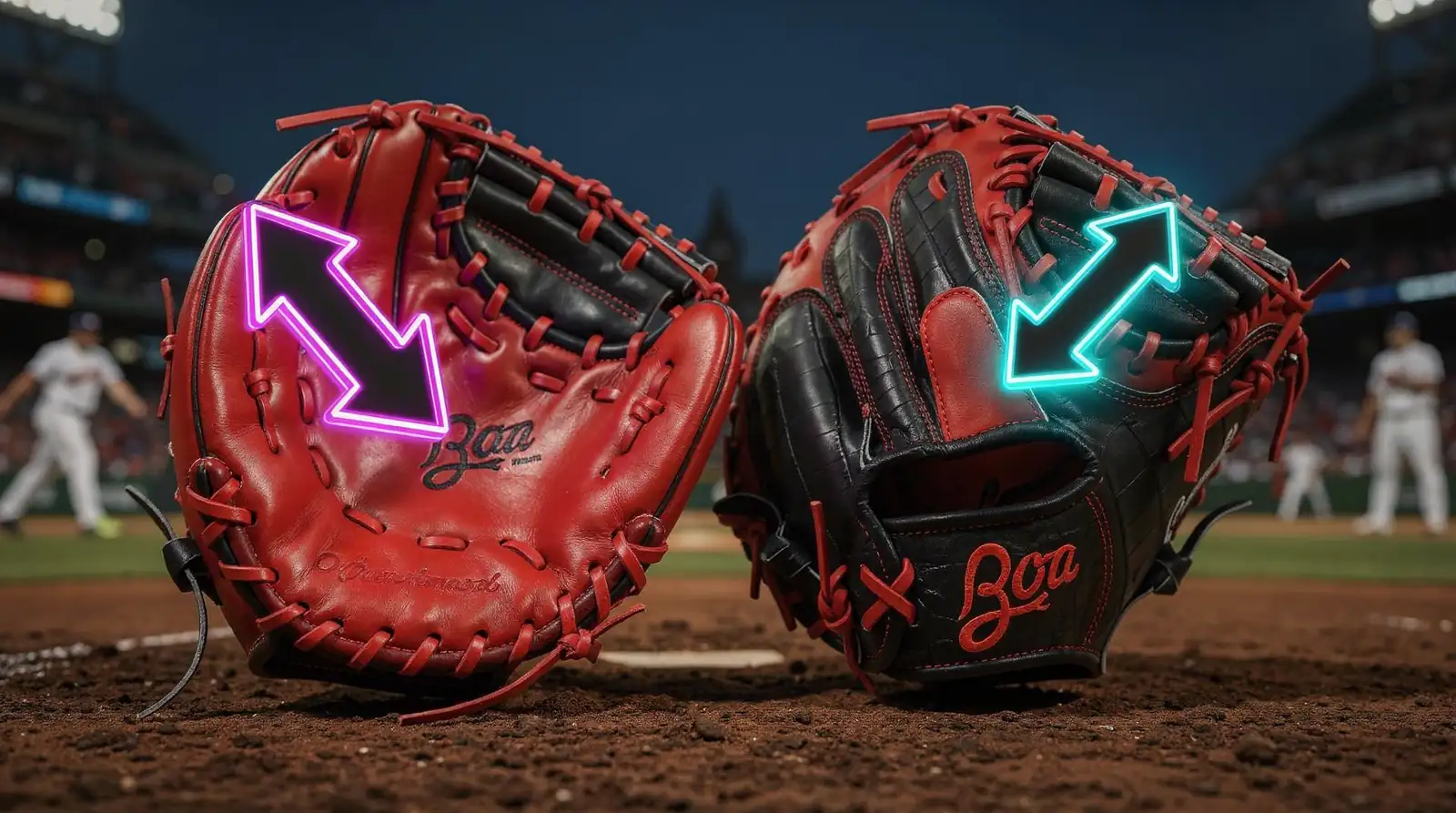
Lacing is a structural element of a baseball glove, not a cosmetic one. It holds the leather panels together, shapes the pocket, and governs how the glove flexes through each catch. As laces stretch, loosen, or wear down, a glove’s fit changes, its pocket loses definition, and its performance becomes harder to predict. Recognizing worn baseball glove laces early, and understanding how tension, material, and pattern work together, helps a player maintain a glove’s structural integrity over a full season of play. Boa Custom builds every glove from premium Kip and Steerhide leathers and laces each one to a player’s specified pattern and tension, treating lacing quality and leather quality as one connected system rather than separate concerns.
How Lacing Shapes Pocket Depth and Flex
A glove’s pocket takes its shape from the interaction between its web pattern, its leather, and its lacing tension, not from any single one of those elements alone. Web pattern sets the general range of motion: open patterns such as a trapeze or basket allow more leather to travel and typically suit outfield gloves built for a deep, secure catch, while tighter patterns such as an I-web or two-piece web restrict that range and suit the shallower, faster-releasing pocket infielders and pitchers tend to prefer.
Lacing tension works within whatever range the web pattern allows. Snug lacing narrows the pocket and keeps the fingers aligned; looser lacing lets the pocket open wider and the fingers flex more independently. Treating web style alone as the deciding factor in pocket depth is a common oversimplification. In practice, two gloves with the same web pattern can feel noticeably different depending on how tightly they are laced and how far the leather has broken in.
Lace Construction and Tension
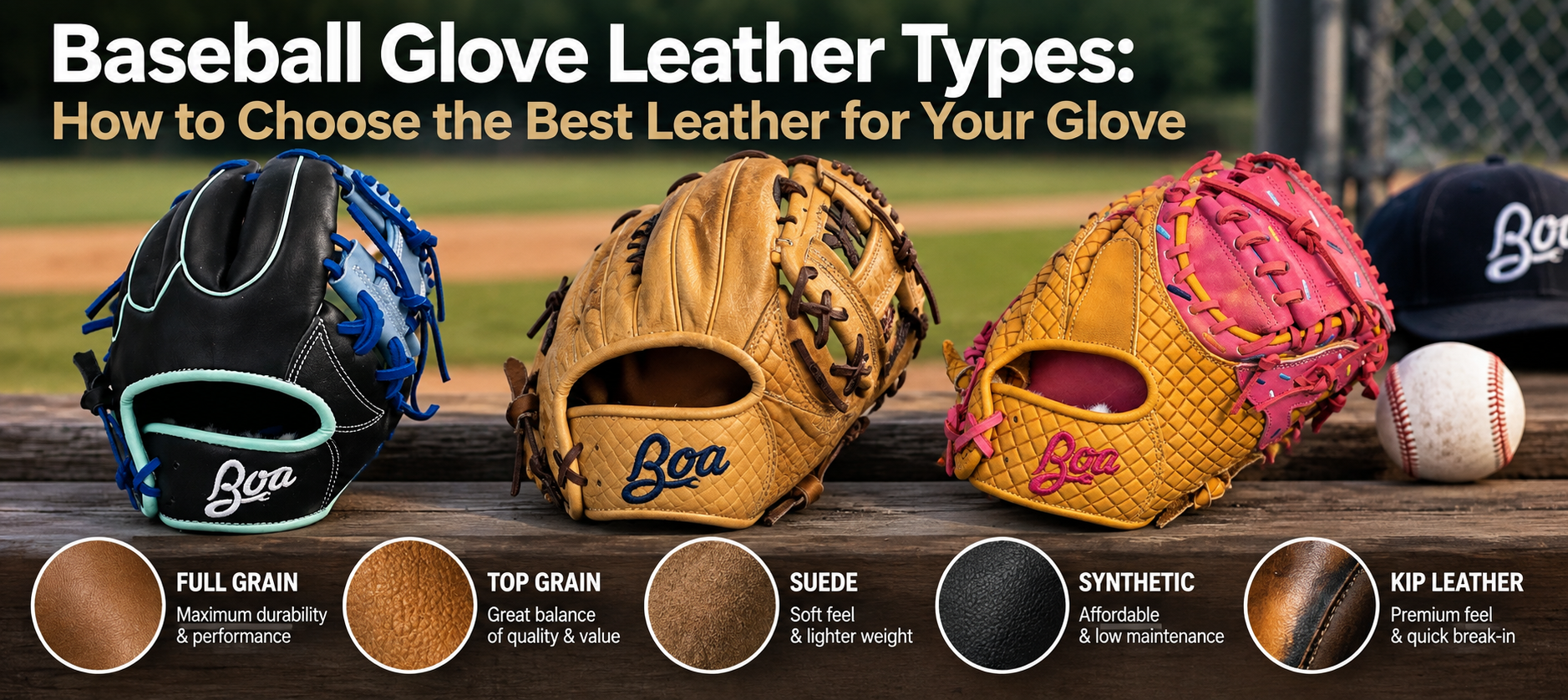
Glove laces are most commonly cut from leather, though synthetic lacing also appears on some gloves, particularly lower-cost or youth models. Good-quality leather lace holds tension well and stretches gradually and predictably as a glove breaks in, which is part of why it remains the standard choice for performance gloves. Synthetic lace can hold up reasonably well too, though it tends to respond differently to repeated flexing and moisture, so the right material often comes down to the glove’s intended use and the player’s preference rather than one option being correct in every case.
Tension is set when a glove is built or relaced, and it is not simply a matter of pulling laces as tight as possible. Overly tight lacing can restrict the flex a glove needs through the pocket and fingers, while overly loose lacing lets the structure shift and lose its shape under repeated impact. Boa Custom sets lacing tension as part of its build process, working from the leather type, web pattern, and position a glove is built for.
Tight vs. Loose Lacing: How Each Affects Glove Feel
Lacing tension is a deliberate trade-off, not a simple “tighter is always better” choice. The right tension depends on position, leather type, and how broken in the glove already is.
How a glove feels in the hand comes down to more than its leather or web pattern; lacing tension changes pocket shape and flex in ways a player will notice immediately.
Lacing Tension | Effect on Pocket | Effect on Flex | Best Suited For |
|---|---|---|---|
Tight lacing | Narrower, more defined pocket that holds its shape | Less give through the fingers and web; faster to close | Infielders and pitchers who need a quick, controlled release |
Loose lacing | Wider, more open pocket that can flex further | More give through the fingers and web; slower to close | Outfielders who need a deep pocket for full-extension catches |
Lacing that has loosened from wear | Pocket loses its intended shape and shifts under impact | Unpredictable flex; fingers may collapse inward | No position; indicates the glove needs attention |
Signs of Lace Wear Worth Watching
Laces wear gradually, and the early signs are usually subtle rather than sudden. A web that shifts out of position on impact, a pocket that no longer holds its shape, fingers that lose their defined channel and collapse toward each other, or a heel that feels soft and unstable during hard catches are all signs that lacing tension has loosened or a lace has begun to fray. None of these signs mean a glove is finished, but each is worth addressing before a lace actually snaps mid-game.
Maintaining Glove Laces Over a Season
Routine glove maintenance and care extends the life of its laces along with its leather. A few habits make the biggest difference:
Condition the leather periodically with a product suited to the glove’s leather type, since dry leather accelerates lace wear at the stress points around the web and fingers.
Store the glove with a ball in the pocket to help it hold its shape, rather than flat or tightly folded, which stresses laces unevenly.
Check lacing tension at the start of a season, since laces can loosen gradually even without visible damage.
Avoid leaving a glove in extreme heat or wet conditions, which dries out or weakens both leather and lace.
Customizing Glove Lacing
Routine glove maintenance and care extends the life of its laces along with its leather. A few habits make the biggest difference:
Condition the leather periodically with a product suited to the glove’s leather type, since dry leather accelerates lace wear at the stress points around the web and fingers.
Store the glove with a ball in the pocket to help it hold its shape, rather than flat or tightly folded, which stresses laces unevenly.
Check lacing tension at the start of a season, since laces can loosen gradually even without visible damage.
Avoid leaving a glove in extreme heat or wet conditions, which dries out or weakens both leather and lace.
Relacing a Glove: Practical Considerations
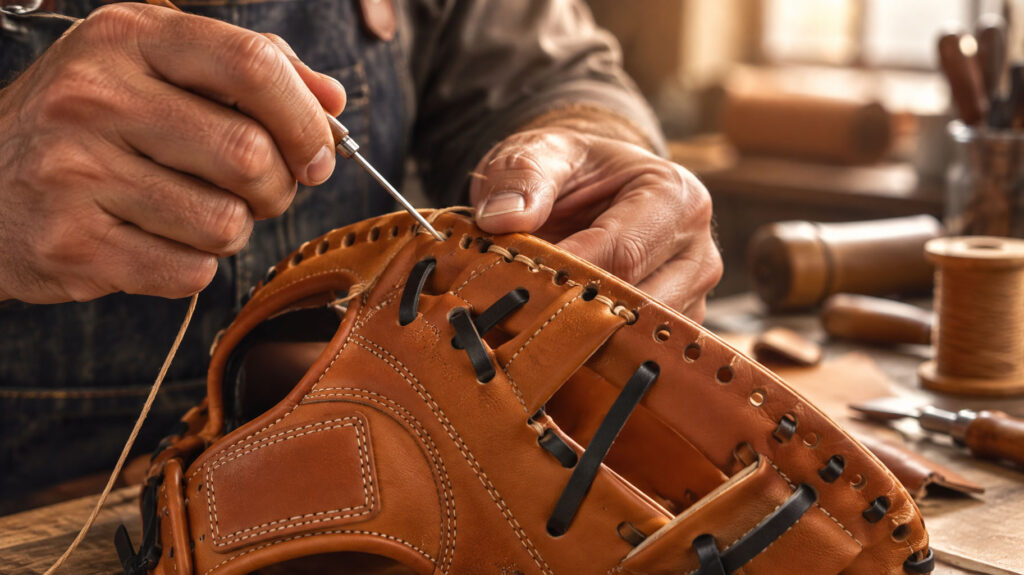
Relacing restores a glove’s structure once laces have stretched, frayed, or failed, but no single method applies to every glove. The right approach depends on the glove’s original lacing pattern, the leather it is built from, and how much of the lace needs replacing.
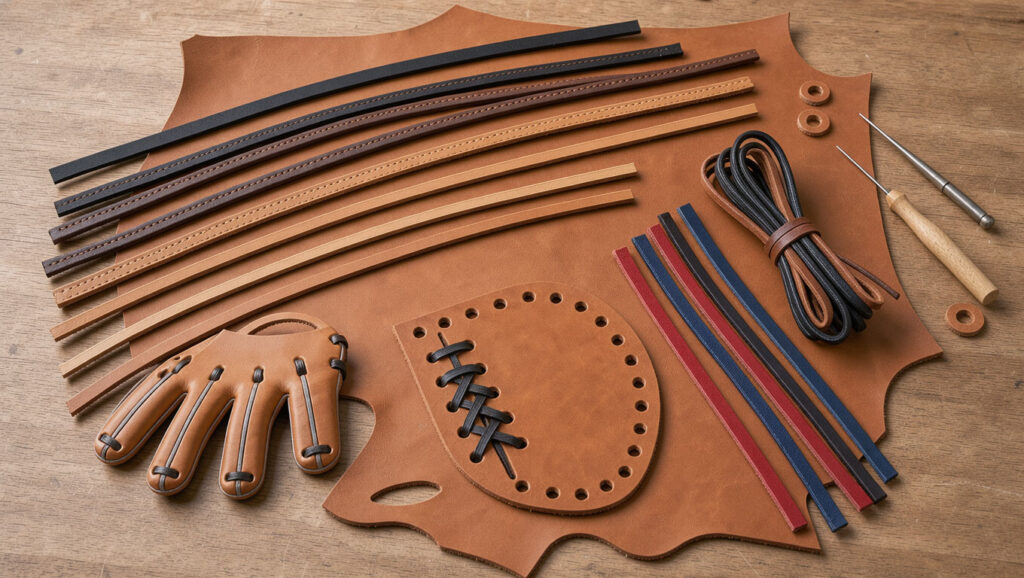
A general relacing project typically involves:
A lacing needle and a sharp awl for clearing old lace holes
Replacement lace cut to match the removed sections, with extra length allowed for knots
Needle-nose pliers for pulling each pass snug
A sharp blade or scissors for clean cuts
Knot choice follows a similar logic: some gloves are finished with simple overhand knots, others with square knots or manufacturer-specific ties, and no single knot type is correct for every glove. What matters more than the knot style is that it is pulled tight, sits flush against the leather, and is trimmed cleanly so it does not catch or unravel. A glove with sound leather but failing laces is typically a strong candidate for a baseball glove lace replacement; a glove with cracked leather, a mismatched size, or a pocket that has permanently lost its shape is usually better replaced outright than relaced.
FAQ
What are the first signs a glove needs relacing?
A web that shifts out of position on impact, a pocket that no longer holds its shape, fingers that collapse toward each other instead of holding a defined channel, and a heel that feels soft during hard catches are all early signs that lacing has loosened or started to fray.
Does lacing tension really change how a glove feels, or is it mostly the leather?
Both matter, but they affect different things. Leather type and break-in largely set how soft or stiff a glove feels overall, while lacing tension controls how snug the pocket sits and how far the fingers and web can flex. The same glove laced tighter or looser will feel noticeably different in the hand.
Is leather or synthetic lace better for a glove?
Leather lace is the standard on most performance gloves because it holds tension predictably as it breaks in, but synthetic lace can hold up reasonably well on certain gloves, particularly lower-cost or youth models. The better choice depends on the glove’s construction and how it will be used, rather than one material being correct in every case.
Does one knot type work for every glove?
No. Gloves are finished with overhand knots, square knots, or manufacturer-specific ties depending on the glove and lacing pattern. What matters most is that the knot is pulled tight, sits flush against the leather, and is trimmed cleanly so it does not catch or come loose over time.
When is relacing not enough, and a glove needs to be replaced instead?
Relacing restores structure when the leather is still sound, but it cannot fix cracked leather, a glove that no longer fits the player’s hand, or a pocket that has permanently lost its shape. In those cases, replacement is the more practical option.
Conclusion
Lacing is one of the quieter factors in how a baseball glove performs, but its effect on pocket shape, flex, fit, and durability runs through every catch a player makes. Tension works alongside leather and web pattern, not in place of them, which is why the same glove can feel entirely different depending on how snug its laces are set. Watching for early signs of wear, keeping laces conditioned and checked each season, and choosing materials and patterns suited to how a glove is actually used all help preserve that balance. When laces do need attention, relacing can restore a glove’s structure, but the right approach depends on the glove itself rather than a single universal method. Boa Custom builds that understanding into every glove from the start, matching leather, web pattern, and lacing tension to how each player plays.