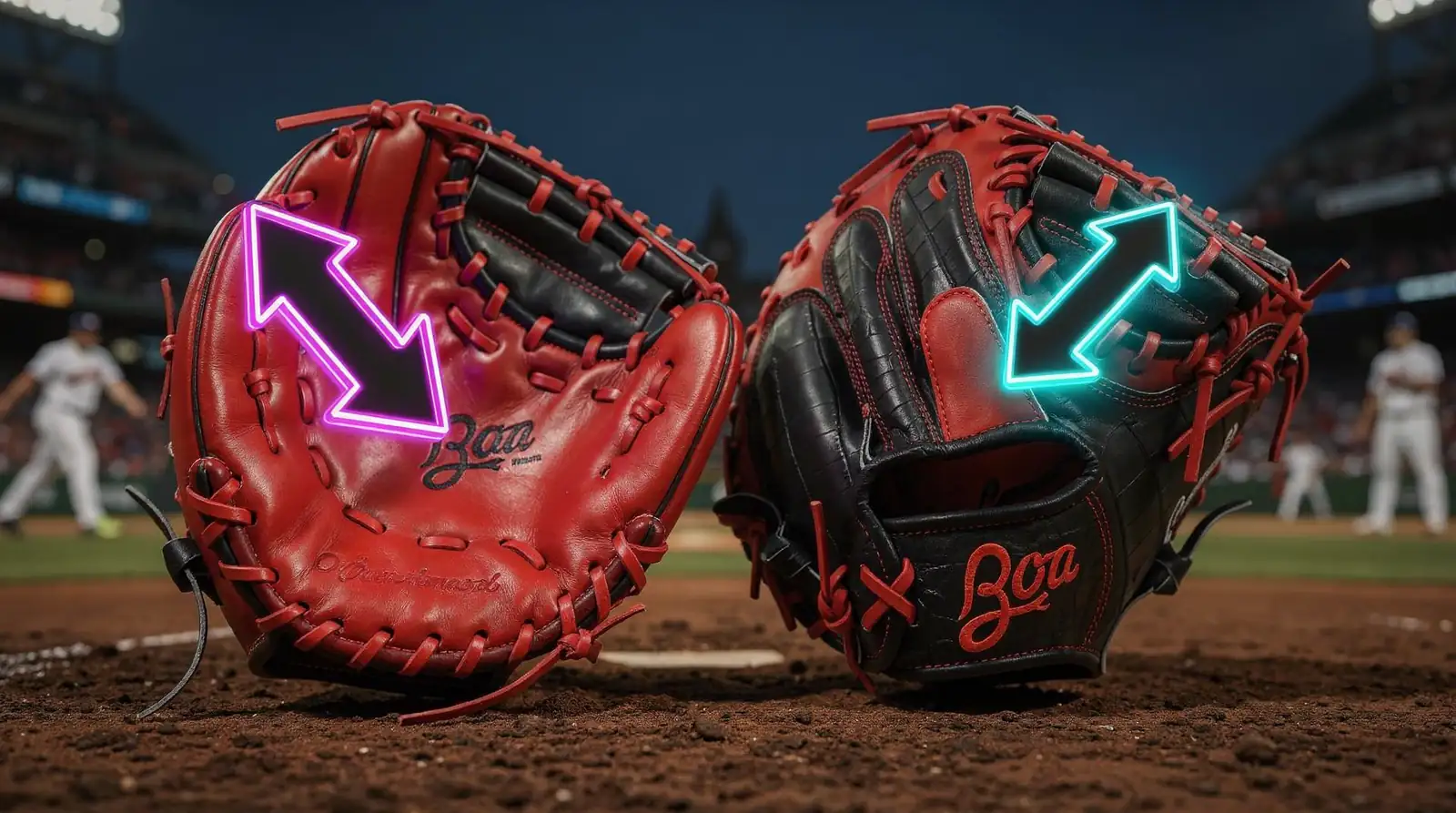

Catcher’s mitt sizing depends on the player’s age, hand size, and position demands, though no single number fits every player at a given age. Mitts generally run from about 29.5 to 32 inches for youth players, while high school and adult catchers typically use mitts between 32 and 34.5 inches. Softball catcher’s mitts follow the same circumference-based sizing, usually falling in a similar range, though exact sizing can vary slightly by league. Unlike a fielder’s glove, a catcher’s mitt has no individual finger stalls: it has a separate thumb stall and one broad, padded pocket that holds the other four fingers together, which is what creates the deep pocket used for pitch framing and blocking.
Catcher's Mitt Size Chart by Age
The chart below gives approximate starting points. Treat it as a guide, not a rule, since hand size and playing style vary within every age group.
Age Range | Approximate Mitt Size | Why |
|---|---|---|
Under 7 | 29.5″ – 30″ | A smaller circumference closes easily and stays controlled during quick transfers. |
8 to 10 | 30″ – 31″ | A slightly larger pocket accommodates growing hands. |
11 to 13 | 30″ – 32.5″ | A wider range reflects the jump in pitch speed at this level. |
14 and up (high school, college, adult) | 32″ – 34.5″ | More surface area and padding handle higher-velocity pitching. |
A catcher with hands larger or smaller than typical for their age should size by fit rather than by age alone, the chart is a starting point for trying mitts on, not a final answer.
How to Measure a Catcher's Mitt
Circumference tells you the mitt’s size on paper, but it does not confirm fit. Checking fit is a separate step: once a mitt’s circumference lands in the right general range, the player should put a hand inside and check how it feels, how the wrist sits in the strap, whether the fingers reach comfortably into the pocket, and whether the mitt closes fully around a ball. A mitt can carry the “right” circumference for a player’s age and still feel wrong on the hand.
What Happens If a Catcher's Mitt Is the Wrong Size?
An oversized mitt slows transfers and reduces throwing accuracy, since the hand shifts inside the pocket during catch reception instead of staying locked in place. Blocking pitches in the dirt also becomes harder when the mitt will not close tightly around the ball. A mitt that runs too small, on the other hand, limits pocket depth and can leave fingers jammed against the top seam, which affects both comfort and control over a full game.
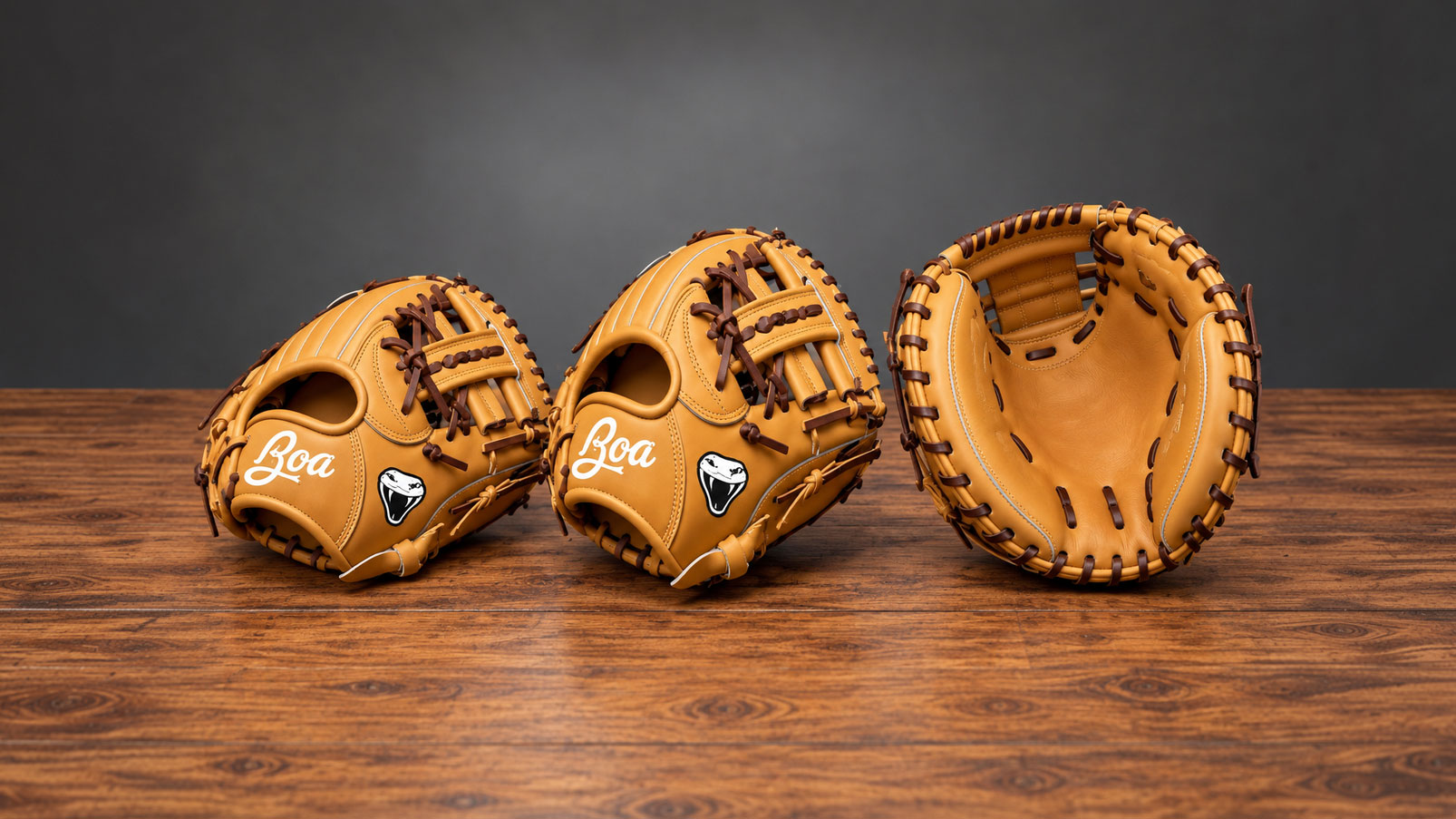
A custom-built mitt can dial in fit beyond what a standard size chart offers. Boa Custom builds mitts to a player’s specific hand and preferences, and a properly fitted catcher mitt closes consistently and holds its pocket shape through repeated use.
Youth vs. Adult Catcher's Mitt Sizing
The main differences between youth and adult mitts come down to pocket depth and padding, not just circumference. Youth mitts favor a smaller, easier-to-close pocket for faster transfers at lower pitch speeds. Adult and high school mitts add padding and surface area to handle pitches thrown with more velocity, which also means a slightly longer break-in period before the mitt feels fully game-ready.
How to Test Catcher's Mitt Fit Before You Buy
Circumference and age charts narrow down the right size, but these checks confirm the mitt actually works for the player:
Wrist fit
The wrist strap should sit snug without restricting rotation. If the mitt flops or shifts when the wrist flicks, the strap is too loose.
Comfort
Make a fist inside the mitt. Fingers should reach the pocket without jamming into the top seam, and there should be no pinching across the back of the hand.
Closure
Squeeze the pocket around a ball. It should close firmly with no gap between the thumb and fingers; a mitt that will not close fully around a ball is not doing its job behind the plate.
Between two sizes
If a player is between two mitt sizes, the right call depends on priorities. A smaller size favors quicker transfers and tighter control, useful for catchers focused on throwing out runners. A larger size favors pocket depth, useful for catchers who block a high volume of pitches in the dirt. Since leather breaks in and loosens slightly with use, a mitt that feels a touch snug out of the box is often a safer choice than one that already feels loose.
Leather and Break-In
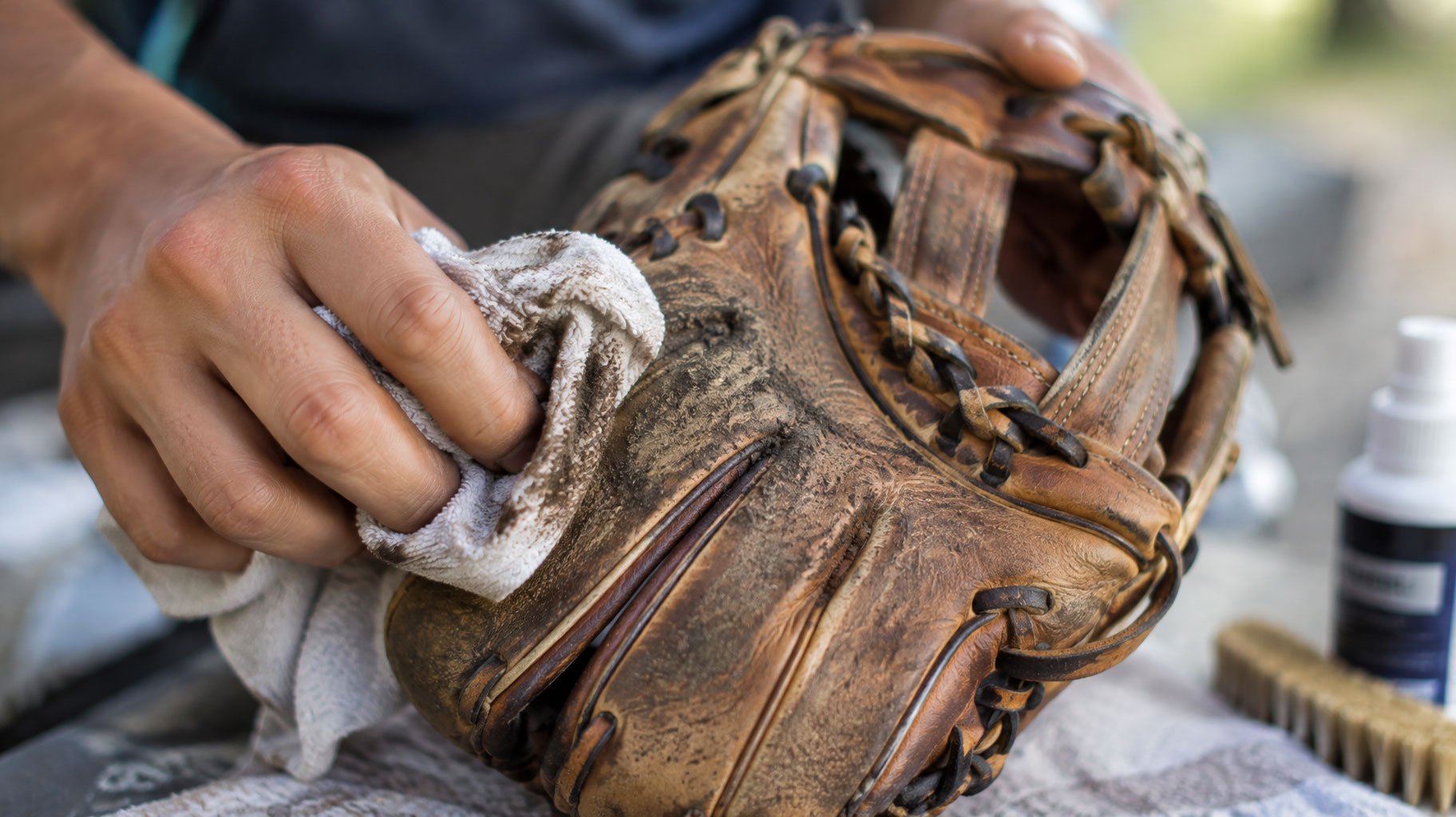
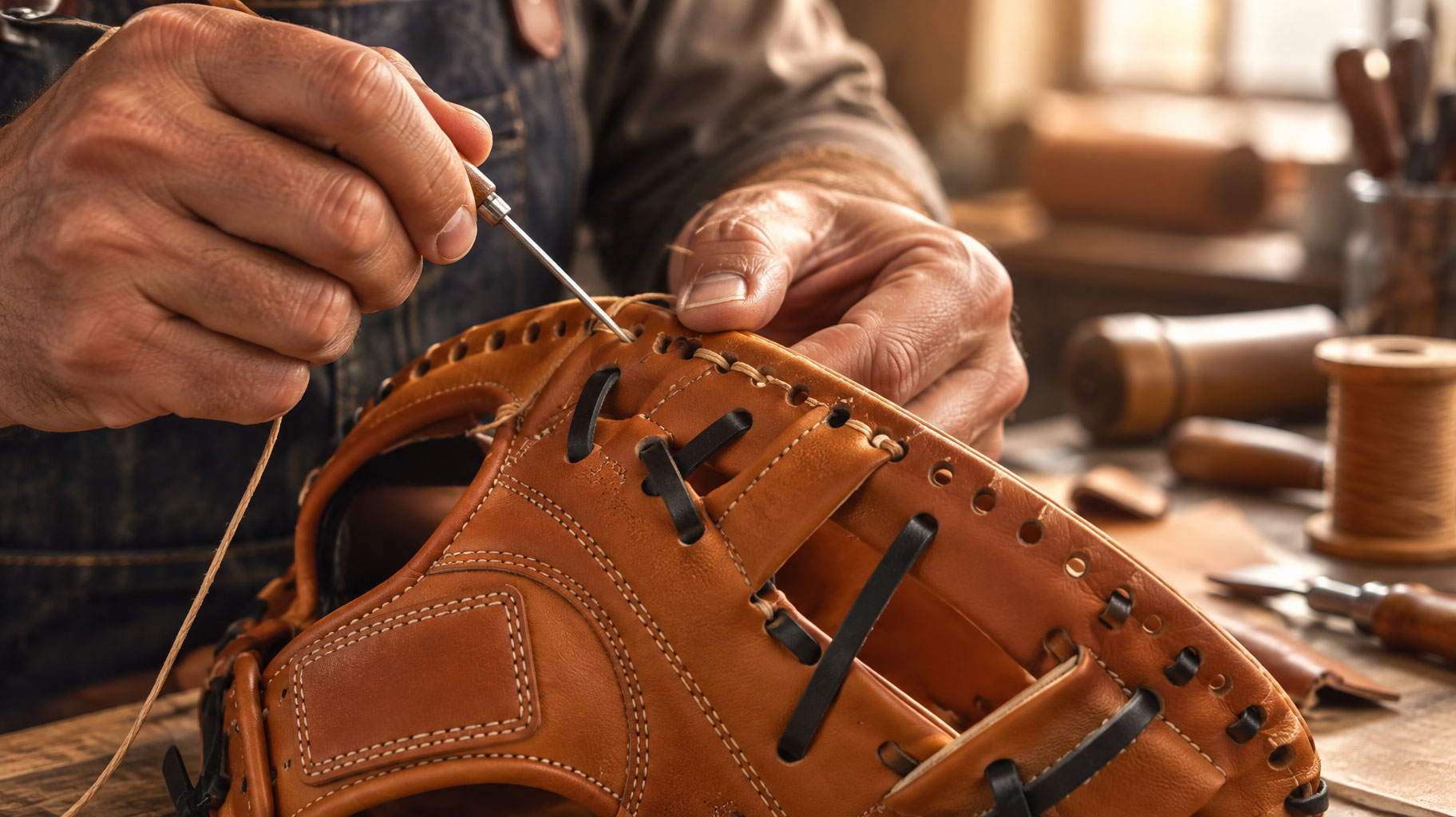
Leather type affects both break-in time and how long a mitt holds its shape. Boa Custom uses Kip and Steerhide leathers, hand-stitched for durability, which require a deliberate break-in period before the pocket sets. A quality mitt that is broken in properly holds its shape through hundreds of innings behind the plate.
FAQ
What's the real difference between a catcher's mitt and a fielder's glove?
A catcher’s mitt has a thumb stall and one wide, padded pocket for the other four fingers, with no separate finger stalls. A fielder’s glove has individual stalls for each finger, which allows more finger flexibility but less pocket depth.
How do I know if my catcher's mitt is too big or too small?
A mitt that’s too big will shift during transfers and feel loose when closing around the ball. A mitt that’s too small will feel cramped, with fingers pressing against the top seam, and will limit how deep the pocket can get for blocking pitches.
Should a travel ball catcher size up from a standard youth mitt?
Not automatically. Sizing should follow hand size and the speed of pitching the catcher is seeing, not just the level of play. A travel ball catcher with average hand size for their age may still fit comfortably in the standard youth range; trying the mitt on is more reliable than sizing up by default.
What if my measurement falls between two chart sizes?
Choose based on priority: a smaller size supports faster transfers and tighter control, while a larger size adds pocket depth for blocking. A snug-but-not-tight fit out of the box is usually preferable, since the leather will loosen with break-in.
Does a custom mitt fit differently than a standard off-the-shelf size?
Yes. A standard mitt is built to a fixed circumference, while a custom mitt, like those built through Boa Custom’s glove builder, is sized to the player’s own hand and preferences. That removes the guesswork of landing between two standard sizes.
Conclusion
Selecting the right catcher’s mitt size is a direct investment in performance behind the plate. A mitt that matches circumference to hand size and playing level supports secure transfers, reliable blocking, and consistent pocket control through a full game. Use age-based ranges as a starting point rather than a fixed rule, then confirm the fit with a hands-on check of the wrist strap, comfort, and closure. The right fit gives a catcher the confidence to handle every pitch with precision.