A baseball glove’s web affects much more than its appearance. Web design can influence pocket depth, visibility, ball security, flexibility, and how quickly a player transfers the ball. Different positions place different demands on a glove, so understanding baseball glove web styles can help players choose a design that complements how they play. Boa Custom builds gloves around these performance needs while giving players the ability to personalize the materials and design of their glove.
What Are the Main Baseball Glove Web Types?
Most gloves on the field use one of a handful of web patterns: the I-web, H-web, trapeze web (including the modified trapeze), and basket or closed web. Each pattern changes how a fielder tracks, secures, and releases the ball, so the choice matters well beyond appearance. Web construction shapes pocket depth, flexibility, and how quickly the glove closes around the ball, which is why serious players treat it as a functional decision rather than a cosmetic one.
The I-web trims material for a lighter, more open design, favored by players who value a quick transfer. The H-web adds a horizontal bar for extra stability, common among infielders and pitchers who want a firm, moderately shallow pocket. The trapeze web stretches leather laces across an open frame, giving outfielders extra reach on high balls; a modified trapeze adds a supporting strip of leather across that same open frame, keeping much of the reach while giving the pocket a bit more structure. The basket web uses tightly woven leather to create a closed, flexible pocket that provides added ball security and concealment. This design is especially useful for pitchers who want to keep their grip hidden, while other players may choose it for its traditional feel and secure pocket.
| Web Type | Pocket Depth | Typical Positions | Key Feature |
|---|---|---|---|
| I-web | Shallow | Second base, shortstop | Lightweight, fast transfer |
| H-web | Moderate | Infield, outfield | Stable, secure pocket |
| Trapeze web | Deep | Outfield | Extra reach at full extension |
| Modified trapeze web | Moderate to deep | Outfield, pitcher | Added support with an open feel |
| Basket / closed web | Moderate to deep | Pitcher, utility | Hides the ball, shields pocket from elements |
Which web pattern is best for beginners?
Beginners should prioritize comfort, proper sizing, and a glove they can open and close confidently rather than choosing a web based on appearance alone. A web that complements the player’s position and creates a comfortable pocket is generally more important than selecting one specific pattern for every beginner. A basket-style or closed web hides the ball more consistently as it settles into the pocket, which builds confidence during early development.
Does web construction affect catching feel?
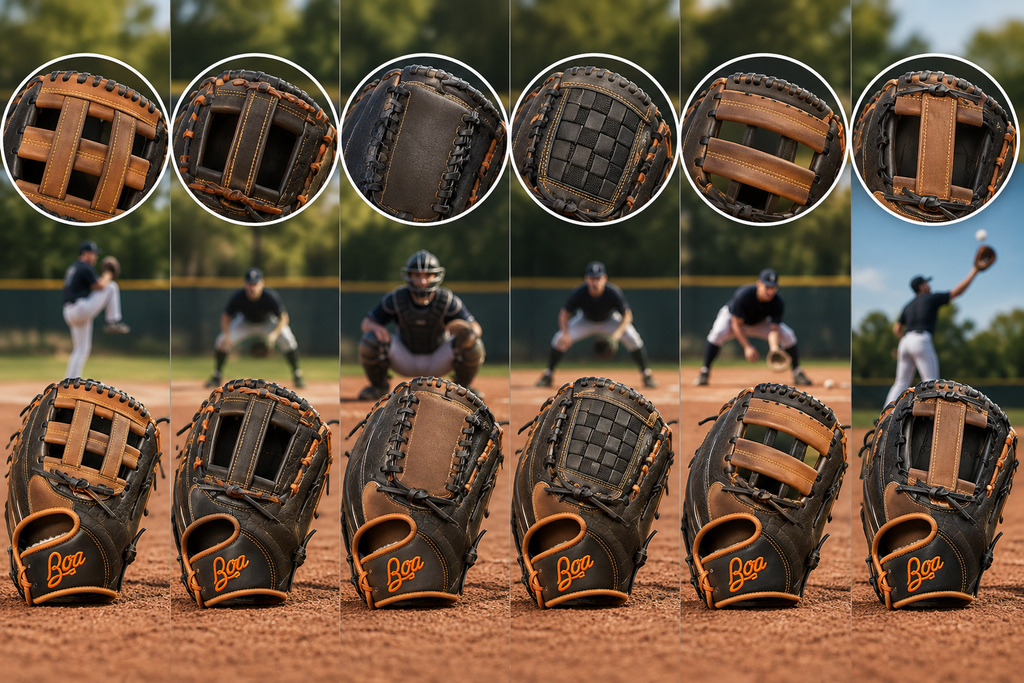
Yes. Web density and lacing pattern change flexibility, pocket depth, and how quickly a glove closes around the ball. A tighter weave feels firmer and more direct; a looser, open weave gives more cushion but takes slightly longer to close fully.
Boa Custom’s design process supports this decision directly: players can select a web pattern matched to their position and playing style rather than settling for a generic template. Every Boa glove is handcrafted from premium materials, and high-grade Kip and Steerhide leathers support durability across each web style Boa Custom offers.
What Makes a Basket Web (Closed Web) Glove Ideal?
A basket web uses tightly woven leather to create a closed, flexible pocket. Its covered design provides ball security and limits visibility through the web, which can make it particularly useful for pitchers who want to conceal their grip. Basket-style webs can also appeal to players who prefer a traditional closed-pocket feel.
A true closed web takes this a step further, using a single continuous piece of leather with little or no gap in the pocket. Third basemen and pitchers often lean toward this style because it removes almost all ball visibility and gives a secure, snag-free release on quick, close-range plays.
Why does construction quality matter for a basket web?
A closed pocket only performs as designed when the stitching and leather hold their shape under repeated impact. Each Boa glove is built by hand, giving the woven web the structural integrity needed to stay tight through a full slate of games. Loose stitching or thin material lets a basket web sag, and a sagging web loses the secure grip infielders and pitchers depend on.
Does leather choice affect how long a basket web lasts?
Leather grade determines whether a basket web holds its closed shape across a season or breaks down early. Boa Custom uses high-grade Kip and Steerhide leathers, chosen to resist stretching and warping. That durability keeps the pocket consistent catch after catch, rather than loosening as the leather breaks in.
Players comparing web styles for infield, first base, and pitching positions should weigh both design and build quality. A well-constructed basket or closed web, made from durable leather and secured with careful stitching, delivers the consistent, reliable pocket these positions need every inning.
How Do I-Web and H-Web Gloves Compare?
Two of the more open patterns come up often when players compare web styles: the I-web and the H-web. Each gets matched to a specific role on the field, since a shortstop or second baseman needs a fast release while a pitcher or third baseman often needs a bit more stability on hard-hit balls. That distinction shapes which pattern ends up on a given player’s hand.
Size, padding, and pocket depth all shift depending on position, and web choice follows the same logic. A middle infielder’s glove trims down for speed and control, while a corner infielder or pitcher’s glove often adds a touch more structure for stability. Identifying the right web starts with asking what job the glove needs to do, not which pattern looks best on the shelf.
What makes an I-web different from an H-web?
The I-web uses a single vertical leather strip connecting the thumb and pinky sections, creating a shallow, flexible pocket favored by middle infielders who need fast transfers. The H-web adds a horizontal bar across two vertical posts, forming a slightly deeper, more stable pocket suited to third basemen and pitchers who track hard, high-hit balls.
Can a custom glove be built with either web pattern?
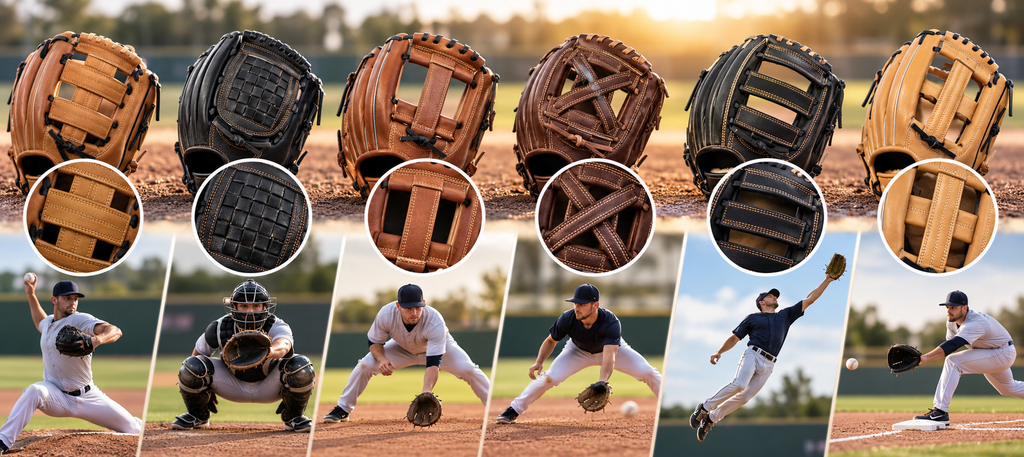
Boa Custom’s design process lets players request open patterns, including the I-web or the H-web, based on preferred feel and position. Each glove is built by hand, giving these open web patterns a durable shape through a full season, whether the build calls for an I-web, an H-web, a trapeze web, or a basket web.
When Is a Trapeze Web the Right Choice?
A trapeze web suits players who need a deep pocket for tracking fly balls at full extension. Outfielders benefit most from this design, thanks to its open, elongated lacing pattern that creates extra room in the pocket for line drives and balls hit into the gap. No official rule dictates which web belongs at which position, so the choice often comes down to feel rather than tradition.
A modified trapeze keeps most of that reach but adds a leather strip across the open frame for a bit more support, a middle ground that appeals to outfielders and first basemen who want extra pocket depth without giving up too much flexibility. For a coach guiding a young outfielder toward the right web, both the standard and modified trapeze are worth considering.
Does the leather matter for a trapeze web glove?
Leather quality determines whether a trapeze web holds its shape over a full season. Boa Custom builds its gloves from durable Kip and Steerhide leathers. A deeper pocket puts more strain on the webbing during repeated catches, so a sturdier hide keeps the shape intact rather than sagging after heavy use.
Can a trapeze web be customized for a specific position?
Yes. Boa Custom’s design process lets outfielders request a trapeze or modified trapeze web sized and shaped around their own game, rather than settling for a stock pattern.
Compared with tighter options like the I-web or H-web, the trapeze and modified trapeze offer more depth and flexibility. Infielders and pitchers generally prefer the quicker release and better concealment of an H-web or closed web, while outfielders lean toward the trapeze family for its extra pocket space. Matching web style to position, and to personal feel, remains the deciding factor.
How to Choose the Right Web for Your Position
Position, catching style, and personal preference determine the best web for any given player. Color options, sizing charts, and the growing list of web patterns on the market can make a final decision feel overwhelming, and that reaction is common: the sheer number of choices available today often leaves families unsure where to start.
For many players, web choice ends up mattering as much as color or size, a personal preference layered on top of the functional demands of the position.
Does the right web really depend on position?
Yes: web construction affects grip, visibility, and pocket depth in ways tied directly to defensive role. Middle infielders generally do best with a shallow, open pattern that releases the ball quickly. Third basemen and pitchers often favor an H-web or closed web for stability and grip concealment. Outfielders and first basemen typically benefit from a deeper trapeze, modified trapeze, or basket web that gives more room to track the ball at range.
Can a custom glove combine web preference with fit?
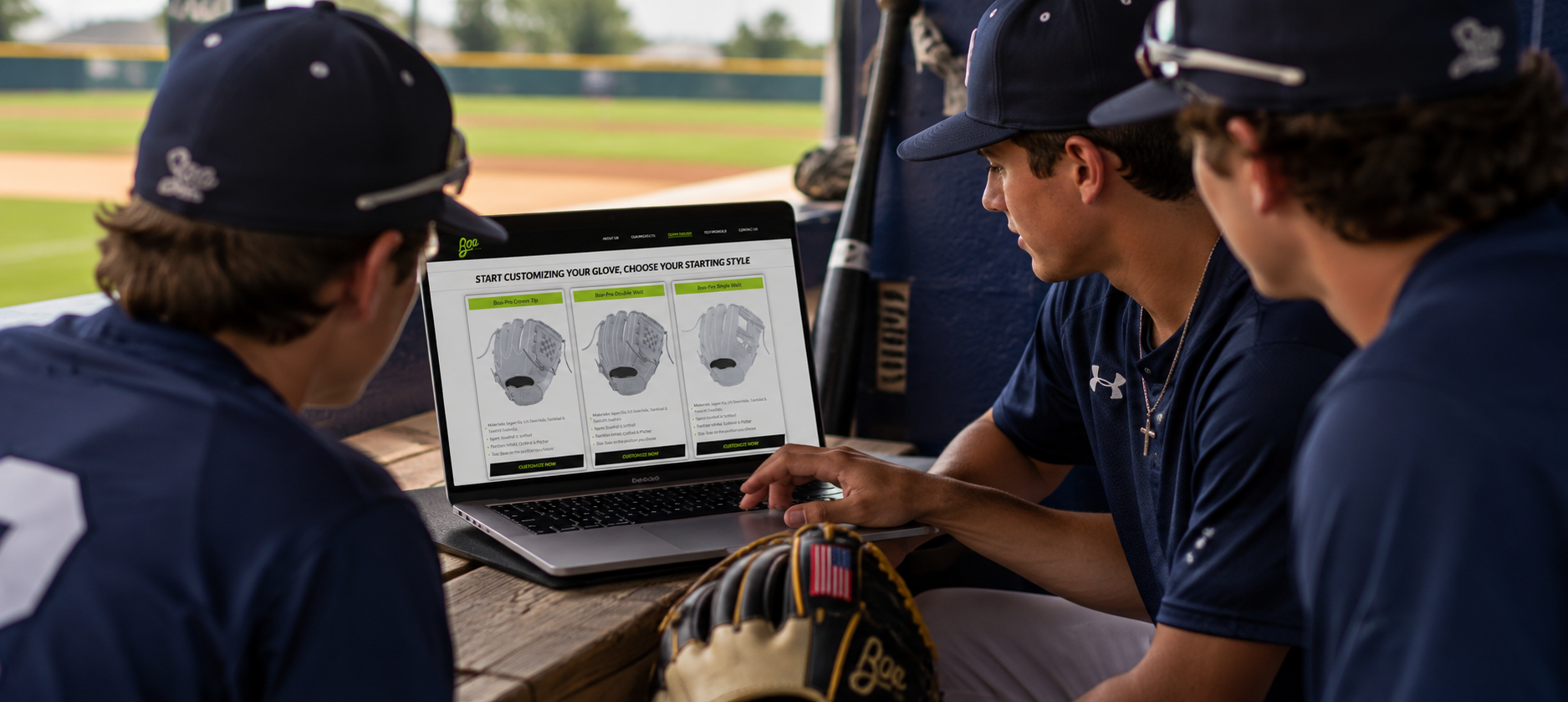
Custom design lets players and parents specify both. Boa Custom’s design process allows customers to build a glove tailored to their needs, matching web pattern to position while dialing in sizing and materials specific to the athlete’s hand and play style.
Families weighing options should consider:
- Position demands: infield, outfield, or pitching duties call for different pocket depths
- Hand strength and size: younger or smaller-handed players often benefit from lighter webbing
- Personal style: color and web choice together create a distinct on-field look
Boa Custom builds each glove with attention to fit and finish, so quality is part of the process from the first stitch to the final inspection.
FAQ
What is the difference between an I-web and H-web glove?
- The I-web trims material for a lighter, more open design suited to quick transfers. The H-web adds a horizontal bar for extra stability and a firmer, moderately shallow pocket, favored by infielders and pitchers.
I web vs H web: which is better for a middle infielder?
- Most middle infielders lean toward the I-web because its lighter build and shallow pocket support a faster exchange from glove to throwing hand, which matters most on double-play turns.
What is a modified trapeze web used for?
- A modified trapeze adds a supporting leather strip across an open trapeze frame. It keeps much of the reach and flexibility of a standard trapeze while giving the pocket a little more structure, making it a good fit for outfielders and first basemen who want extra depth without an overly open feel.
Which web type works best for outfielders?
- Outfielders often choose a trapeze or modified trapeze web for the extra reach and pocket depth at full extension, or a basket web for a deeper pocket that also shields the ball from sun and wind.
Does baseball glove pocket depth matter for pitchers?
- Yes. Pitchers generally prefer a deeper, closed pocket, an H-web, basket web, or true closed web, since it conceals grip and ball position from the batter until release. An open trapeze web is uncommon on the mound for this reason.
Can I switch web styles without buying a whole new glove?
- No. The web is built into the glove during construction, so changing patterns means having a new glove made rather than modifying an existing one. This is one reason players who are unsure often start with a custom build suited to their position from the start.
How do I tell what web pattern is on my current glove?
- Look at the pocket: a single vertical strip is an I-web, a horizontal bar between two posts is an H-web, an open lattice of laces is a trapeze or modified trapeze, and a fully woven or solid pocket is a basket or closed web.
How does Boa Custom help players choose a web type?
- Boa Custom’s design process lets athletes select a web pattern matched to their position and playing style, then builds each glove from premium Kip and Steerhide leathers for durability.
Conclusion
Understanding web types turns glove selection into an informed decision rather than a guess, aligning pocket depth, closure style, and visibility with a player’s true position demands. An infielder, outfielder, and pitcher each benefit from a web built around their own play patterns rather than a generic assumption. Whether the priority is visibility, pocket depth, or a classic look, web choice should reflect both playing style and position. Boa Custom’s design process is built around that idea, giving players the ability to specify web construction alongside every other detail of their glove, so the end result fits how they actually play.